Is GHK-Cu legal? FDA status, injections versus creams, and what the evidence shows
GHK-Cu is not an FDA approved drug and is not on the list of substances US pharmacies may compound. Since 14 May 2026 the FDA lists it as under evaluation, but only for non-injectable routes, and plans to take it to its compounding committee before the end of February 2027. Injectable GHK-Cu has no such status.
Status as of 13 November 2026
FDA approval
None. No approved drug contains it. FDA listings show it only as a bulk ingredient.
503A Bulks List
Not on it. No rule has added it.
Non-injectable routes
Back in Category 1, "under evaluation", since the FDA list of 14 May 2026, after being removed on 22 April 2026.
Injectable routes
Listed by the FDA among substances previously in Category 2 (significant safety risks) whose nominations were withdrawn. Not in Category 1.
Advisory committee
Not reviewed in July 2026. FDA intends to consult it before the end of February 2027.
HHS draft policy, 30 October 2026
Not covered. The draft names six peptides; GHK-Cu is not one of them.
Cosmetics
Sold legally in skin products as a cosmetic ingredient. Intended use decides whether a product is a cosmetic or a drug.
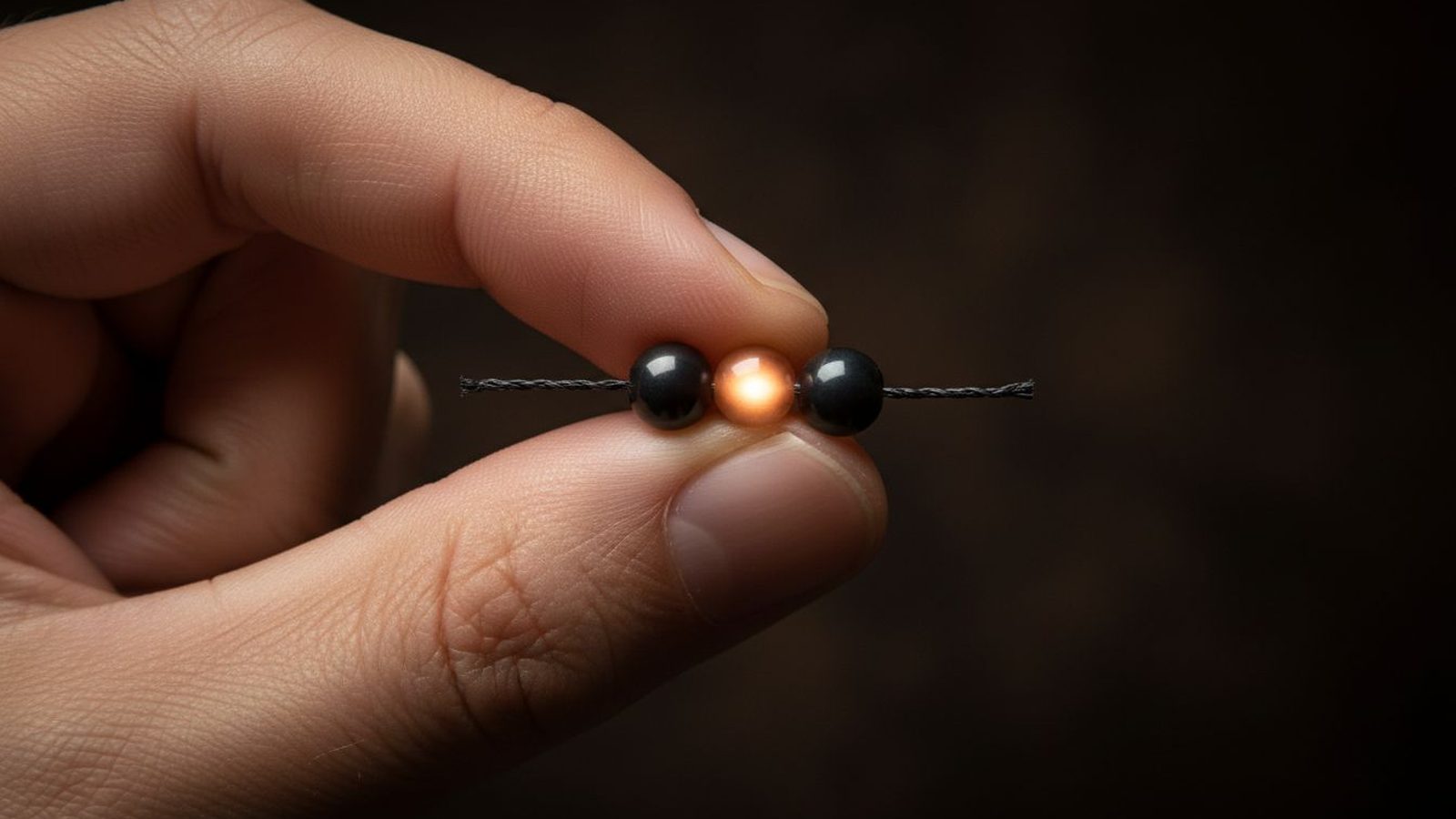
Ozemback · Updated 13 November 2026 · Reviewed against primary sourcesSold on the promise of repair. Illustration, Ozemback.
The short version. GHK-Cu is not FDA approved and is not on the
503A Bulks List. Since 14 May 2026 the FDA has it under evaluation again, but only for non-injectable
routes, with a committee review planned before the end of February 2027. Injectable GHK-Cu is outside
that, and the HHS draft policy of October 2026 does not name it.
NOIs GHK-Cu FDA approved?No. Drugs@FDA has no approved product, and the FDA product listings carry it only as a bulk ingredient.
YESIs it under FDA evaluation for compounding?Yes, for non-injectable routes only. The FDA put it back in Category 1 in its list updated 14 May 2026.
NODoes the October 2026 HHS draft policy cover it?No. BakerHostetler lists the six peptides the draft names, and GHK-Cu is not among them.
Three questions inside "is GHK-Cu legal". Sources: FDA list of nominated bulk drug substances, updated 14 May 2026; Drugs@FDA and NDC Directory via openFDA, 13 November 2026; BakerHostetler, 28 October 2026.
1PubMed record tagged as a clinical trial in a search for copper peptide, 13 November 2026
13patients who completed that trial, which found no objective difference
2FAERS reports naming GHK-Cu, both with other peptides co-reported
Feb 2027deadline the FDA set itself to consult its compounding committee
What is GHK-Cu?
GHK-Cu is a tripeptide of glycine, histidine and lysine bound to a copper ion,
also sold as copper peptide or copper tripeptide-1. GHK occurs naturally in human plasma, and a 2018
review by Pickart and Margolina in the International Journal of Molecular Sciences puts the
plasma level at about 200 ng/mL at age 20, falling to 80 ng/mL by age 60. That decline is the core of
how GHK-Cu is marketed: replace what age takes away. The same review describes laboratory findings on
collagen, elastin, blood vessel growth and gene expression. Both authors list R&D Skin Biology as
their affiliation, and most of the cell and gene work it summarises has not been reproduced in
controlled human trials.
GHK-Cu lives in two markets that follow different rules. In cosmetics, copper peptide has been an
ingredient in creams and serums for decades, and the FDA says what decides whether a product is a
cosmetic or a drug is its intended use: a cream sold to improve how skin looks is a cosmetic, and one
sold to treat a condition is a drug. In the peptide market, GHK-Cu is sold online as an injection for
skin, hair, healing and ageing, often in blends with BPC-157 and TB-500. The FDA NDC Directory lists
GHK-Cu only as a bulk ingredient, including one listing for prescription compounding, and no finished
approved drug.
Three amino acids and one copper ion. Illustration, Ozemback.
In plain EnglishGHK-Cu is a tiny protein fragment carrying copper. Your blood has some naturally. Creams with it are ordinary cosmetics. Injections of it are a different matter, and no US drug containing it has ever been approved.
Is GHK-Cu legal in 2026?
GHK-Cu's legal position in 2026 splits by route, and the split comes from one FDA document. The
FDA's list of bulk drug substances nominated for compounding under section 503A, updated 14 May 2026,
says GHK-Cu, except for injectable routes, was removed from Category 1 on 22 April 2026 because its
nominations were withdrawn. On 5 May 2026 one nominator clarified that it had meant to withdraw only the
injectable route, so the FDA added GHK-Cu (except for injectable routes) back to
Category 1, the group it labels "under evaluation", and said it intends to consult the Pharmacy
Compounding Advisory Committee before the end of February 2027 on adding GHK-Cu to the 503A Bulks
List.
Question
What the record says
Source
FDA approved product?
None. Listed only as a bulk ingredient
Drugs@FDA and NDC Directory, 13 Nov 2026
On the 503A Bulks List?
No
No proposed or final rule
Non-injectable routes
Category 1, under evaluation, again since May 2026
FDA nominated substances list, 14 May 2026
Injectable routes
Previously Category 2; nomination withdrawn
FDA safety-risk page, current as of 22 Apr 2026
Committee review
Planned before the end of February 2027
FDA nominated substances list, 14 May 2026
HHS draft policy
Not named among the six peptides
FR Doc. 2026-22192; BakerHostetler, 28 Oct 2026
Injectable GHK-Cu sits on the other side of that line. The FDA page on bulk substances that may
present significant safety risks, current as of 22 April 2026, lists "GHK-Cu (for injectable routes of
administration)" among substances previously in Category 2 whose nominations were
withdrawn. Its stated concern is that compounded injectable GHK-Cu may pose a risk of immune reactions
because of aggregation and peptide-related impurities, and that there are limited human data to inform
safety. Leaving Category 2 by withdrawal is not a finding that the risk went away, and no document puts
injectable GHK-Cu into Category 1. Category 1 itself is not the 503A list: it means the FDA has not
finished deciding.
GHK-Cu on the record
Oct 1994Randomized trial of Iamin Gel, a GHK-Cu gel, in diabetic foot ulcers published (Mulder et al.)
5 Feb 1996Iamin Gel cleared by the FDA as a wound dressing, a medical device, under 510(k) K953853
2006Randomized trial of GHK-Cu skin care after CO2 laser resurfacing: 13 patients, no objective difference (Miller et al.)
22 Apr 2026Removed from Category 1 after its nominations are withdrawn; injectable GHK-Cu listed as withdrawn from Category 2
5 May 2026One nominator says it withdrew only the injectable route
14 May 2026FDA list: GHK-Cu, except injectable routes, back in Category 1
30 Oct 2026HHS draft enforcement discretion policy names six peptides; GHK-Cu is not one
By end Feb 2027FDA intends to consult its compounding committee on GHK-Cu
Sources: PubMed; openFDA 510(k) database; FDA list of nominated bulk drug substances (14 May 2026); FDA safety-risk page (current as of 22 April 2026); Federal Register; BakerHostetler.Creams under evaluation, injections outside it. Illustration, Ozemback.
In plain EnglishThe FDA is still weighing GHK-Cu for creams and other non-injected forms, and plans to ask its expert committee by February 2027. Injections were pulled from that review after the FDA had flagged them as a safety concern. Neither is an approval.
GHK-Cu is marketed online as an injection. The only route the FDA is still
evaluating is the one that does not involve a needle.
The HHS draft policy is where GHK-Cu is most often misplaced. On 30 October 2026 HHS published FR
Doc. 2026-22192, a draft and non-binding enforcement discretion policy for 503A compounding with
certain peptides while the FDA builds the 503A list. BakerHostetler, summarising its appendix on 28
October 2026, lists six: BPC-157, TB-500, Epitalon, Semax, KPV and MOTS-c. GHK-Cu is not among them,
and it was not one of the seven peptides the committee voted on in July 2026. A Federal Register search
on 13 November 2026 found no committee meeting notice for GHK-Cu yet. The
Ozemback peptide legal status tracker keeps GHK-Cu in its own row, and will
change it the day the FDA schedules that review. You can also test yourself with the
approved, recommended or neither quiz.
What does the evidence for GHK-Cu show?
The controlled human evidence is two small topical trials, decades
apart, pointing in different directions. We found no published trial of injected GHK-Cu.
Patients liked their skin more; the measurements did not move. Illustration, Ozemback.
The strongest result is also the oldest. In 1994 Mulder and colleagues published a
multicenter, randomized, evaluator-blinded, placebo-controlled trial of Iamin Gel, a GHK-Cu gel, in
diabetic foot ulcers, in Wound Repair and Regeneration. With standard wound care in both arms, plantar
ulcers treated with the gel reached a median 98.5% closure against 60.8% with the vehicle, and ulcer
infections fell to 7% from 34%. The product followed the medical device path: the FDA cleared Iamin
Gel Wound Dressing for Procyte Corp. under 510(k) K953853 on 5 February 1996, as substantially
equivalent for some indications. A device clearance for a wound dressing says nothing about injecting
the peptide, and Drugs@FDA lists no approved GHK-Cu drug.
The cosmetic evidence is weaker than its marketing. In the 2006 randomized trial by Miller and
colleagues in Archives of Facial Plastic Surgery, 13 patients completed a comparison of skin care
with and without GHK-Cu after CO2 laser resurfacing. Computer analysis and blinded evaluators found no
significant difference in redness or wrinkles; only patient satisfaction was higher with GHK-Cu (P =
.04). The Pickart review cites larger results, such as a 12-week cream study in 71 women and a 31.6%
cut in wrinkle volume against another peptide, but only in summary, without the full data. In the lab, Hostynek and
colleagues showed copper from GHK-Cu does cross isolated human skin, which says delivery is possible,
not that it works.
Diabetic foot ulcers, median closure after topical GHK-Cu gel versus vehicle (%)
Iamin Gel (GHK-Cu)
98.5%
Vehicle gel
60.8%
Mulder GD et al. Wound Repair Regen 1994;2(4):259-69 (PMID 17147644). Multicenter, randomized, evaluator-blinded, placebo-controlled; plantar diabetic neuropathic ulcers, with standard wound care in both arms. Ulcer infection: 7% versus 34%.
PubMed records on GHK-Cu, by type, searched 13 November 2026
Records mentioning GHK-Cu, copper tripeptide or glycyl-L-histidyl-L-lysine
153
Records tagged clinical trial or randomized controlled trial (copper peptide search)
1
PubMed E-utilities, title and abstract searches run 13 November 2026. The one tagged trial is Miller et al., 2006 (PMID 16847171). The 1994 ulcer trial is not tagged as one in PubMed. Counts change as records are added.
In plain EnglishA copper peptide gel helped diabetic foot ulcers close in one 1990s trial and was sold as a wound dressing. For wrinkles, the one small randomized trial found no measurable change. We found no published trial of injecting it.
What has been reported on safety
The safety record splits by route like the legal one. On skin, a 2016 cell study by Li and
colleagues in Scientific Reports found GHK-Cu was not cytotoxic and did not raise skin irritation
markers, unlike copper chloride and copper acetate at the same concentrations. For injections, the FDA
says data in humans are limited and flags immune reactions from aggregation and impurities. FAERS, via
openFDA data updated 28 October 2026, holds two reports naming GHK-Cu, both marked
serious and both with other products reported alongside: one with sermorelin and BPC-157, listing
anaphylactic shock, and one with a blend labelled GHK-Cu, BPC-157 and TB-500 plus Ozempic and hCG,
listing a lymphoid cancer. Neither report shows that GHK-Cu caused anything.
What is the GHK-Cu dosage?
There is no FDA approved dose of GHK-Cu, because there is no FDA approved
drug.
Every GHK-Cu injection dose you will find in the US comes from somewhere other than a US label or a
published trial. The 1994 ulcer trial applied a metered dose of gel to the wound daily, and the 2006
trial used commercial skin care products, so neither gives a figure that translates to an injection.
The FDA nominated substances list does not set doses, and the injectable nomination was withdrawn before
any evaluation was published. Concentrations printed on cosmetic labels describe a cream, not a drug
dose. We report this because it is the record, and we do not publish a recommended dose, cycle or
protocol for GHK-Cu or any other compound, for any route.
What is still unknown about GHK-Cu?
What is still unknown. Illustration, Ozemback.
Whether injections do anything in people. We found no published trial of
injected GHK-Cu in PubMed.
Whether the cosmetic results hold up. The one tagged randomized trial had 13
patients and found no objective difference.
What the committee will say. The FDA has set itself a deadline of the end of
February 2027 and had published no meeting notice as of 13 November 2026.
What is in a given vial. The FDA names aggregation and peptide-related impurities
as the concern for injectable GHK-Cu.
What blends do. Products that combine GHK-Cu with BPC-157 and TB-500 have no
trial of the combination behind them.
How should you read other pages about GHK-Cu?
Check whether the page uses cosmetic or cell results to sell injections; the human trials in the
record are topical, and the injectable route is the one the FDA flagged. Check whether it says GHK-Cu
is "legal" or "FDA approved" without naming a route; only non-injectable GHK-Cu is under evaluation,
and evaluation is not approval. Check whether it lumps GHK-Cu in with the HHS peptide policy; the
October 2026 draft does not name it. Check who pays the author: nearly every site ranking for GHK-Cu
injections or dosage sells it, sells a consultation or links to a seller. This page carries a date at
the top, 13 November 2026, so you can tell when it stops being current. Related files:
BPC-157, TB-500 and
KPV.
The questions people actually type
Is GHK-Cu legal in the US?
GHK-Cu is not an FDA approved drug and is not on the 503A Bulks List. In its list updated 14 May 2026 the FDA placed GHK-Cu, except for injectable routes, back in Category 1, the group of nominated substances it is still evaluating, and said it intends to consult its compounding committee before the end of February 2027. It is also sold in cosmetics. Whether a specific seller is acting lawfully is a question for a lawyer.
Can pharmacies compound GHK-Cu injections?
Injectable GHK-Cu is outside the FDA evaluation. The nominator withdrew the injectable route, and the FDA safety-risk page lists GHK-Cu for injectable routes among substances previously in Category 2, citing a risk of immune reactions from aggregation and peptide-related impurities. The HHS draft policy of 30 October 2026 does not name GHK-Cu at all.
Is GHK-Cu FDA approved?
No. A search of Drugs@FDA returns no approved product, and the FDA NDC Directory lists GHK-Cu only as a bulk ingredient. A GHK-Cu gel, Iamin Gel, was cleared in 1996 as a wound dressing under the medical device route, which is not a drug approval.
Does GHK-Cu work for skin or wrinkles?
The controlled evidence is thin. The only PubMed record tagged as a trial in our search followed 13 patients after laser resurfacing and found no objective difference in redness or wrinkles, though patients using GHK-Cu rated their skin higher. Larger cosmetic results are reported in reviews by authors from a skin care company.
What is the GHK-Cu dosage?
There is no FDA approved dose, because there is no FDA approved drug. Injection figures on pages that rank for this query come from sellers and clinics, not from a US label or a published trial. We do not publish a dose, cycle or protocol for this or any compound.
What are the side effects of GHK-Cu?
For injections, largely unknown. The FDA says there are limited human data and flags immune reactions. FAERS holds two reports naming GHK-Cu, both serious and both with other peptides reported alongside, so neither shows that GHK-Cu caused anything. On skin, a cell study found GHK-Cu less irritating than plain copper salts.
Is GHK-Cu in the HHS peptide policy?
No. The draft policy of 30 October 2026 names BPC-157, TB-500, Epitalon, Semax, KPV and MOTS-c, as summarised by BakerHostetler. The peptide legal status tracker carries GHK-Cu separately, with the date of each fact.
Sources
FDA. Bulk drug substances nominated for use in compounding under section 503A of the FD&C Act (Categories 1, 2 and 3). Updated 14 May 2026. www.fda.gov
FDA. Certain bulk drug substances for use in compounding that may present significant safety risks. Content current as of 22 April 2026. www.fda.gov
HHS. Enforcement Discretion Policy Regarding 503A Compounding Using Certain Peptide Bulk Drug Substances, notice of availability. Federal Register, FR Doc. 2026-22192, 30 October 2026. www.federalregister.gov
BakerHostetler. HHS issues enforcement discretion policy regarding 503A compounding using certain peptide bulk drug substances. 28 October 2026. www.bakerlaw.com
Mulder GD, Patt LM, Sanders L, et al. Enhanced healing of ulcers in patients with diabetes by topical treatment with glycyl-l-histidyl-l-lysine copper. Wound Repair Regen. 1994;2(4):259-69. pubmed.ncbi.nlm.nih.gov
FDA 510(k) premarket notification K953853, Iamin Gel Wound Dressing, Procyte Corp., decision 5 February 1996. www.accessdata.fda.gov
Miller TR, Wagner JD, Baack BR, Eisbach KJ. Effects of topical copper tripeptide complex on CO2 laser-resurfaced skin. Arch Facial Plast Surg. 2006;8(4):252-9. pubmed.ncbi.nlm.nih.gov
Pickart L, Margolina A. Regenerative and protective actions of the GHK-Cu peptide in the light of the new gene data. Int J Mol Sci. 2018;19(7):1987. pubmed.ncbi.nlm.nih.gov
Hostynek JJ, Dreher F, Maibach HI. Human skin penetration of a copper tripeptide in vitro as a function of skin layer. Inflamm Res. 2011;60(1):79-86. pubmed.ncbi.nlm.nih.gov
Li H, Toh PZ, Tan JY, et al. Selected biomarkers revealed potential skin toxicity caused by certain copper compounds. Sci Rep. 2016;6:37664. pubmed.ncbi.nlm.nih.gov
FDA. Is it a cosmetic, a drug, or both? (Or is it soap?). Content current as of 11 September 2024. www.fda.gov
Cite this pageOzemback. "GHK-Cu: status, evidence and dose." Compound file, updated 13 November 2026. https://ozemback.com/compounds/ghk-cu/
Where to go from here
Get a baseline you can actually measure
Whatever you decide, your own numbers are the one part of this that is not
contested. A baseline panel costs less than a month of most things sold in this
category and it is yours to keep.
Ozemback is not a provider and takes no part in any clinical decision.
The link above is an affiliate link: if you buy a panel through it we receive a commission
at no additional cost to you. We are paid for the referral, never for the result, and it
does not change what we publish.
Ozemback is an independent publication. This page reports what regulators, published
trials and other sites state about this compound, with a source beside each claim. It is
editorial analysis, not medical advice. It does not recommend a dose, a protocol or a
course of action, and nothing here should be used to start, stop or change a treatment.
Talk to a licensed clinician.
Get a baseline health panel before any decision.Affiliate linkHealthLabs
Ozemback is independent journalism. Nothing on this site is medical advice. Nothing replaces a licensed clinician. Read the disclaimer
Ozemback is independent journalism. Nothing on this site is medical advice. Nothing replaces a licensed clinician. Read the disclaimer