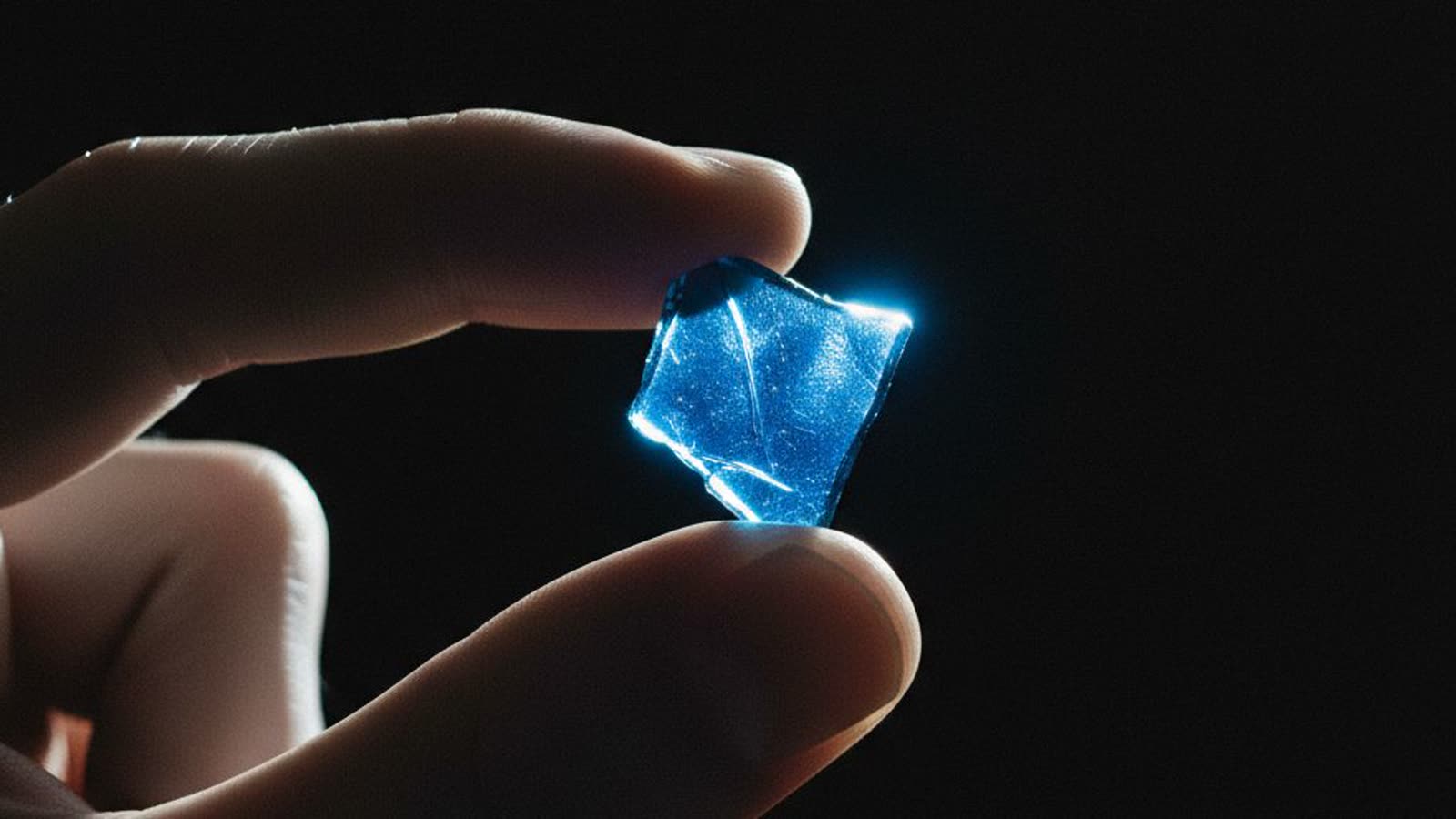
Is TB-500 legal? FDA status, the July 2026 vote and what the evidence shows
TB-500 is not FDA approved, and it is not on the list of substances pharmacies may compound. A committee voted for it in July 2026, against the advice of FDA staff, who found no study in which TB-500 was given to a human being. That gap is the whole story.
Status as of 2 October 2026
FDA approval
None. No approved TB-500 product in the US, and the FDA found none in the ten other countries it checked or via the EMA.
503A Bulks List
Not on it. Not named on the FDA 503A bulk substances page (updated 14 May 2026).
Interim categories
Listed by the FDA as nominated but withdrawn (page updated 22 April 2026). Not in Category 1.
FDA staff recommendation
Against listing, in a briefing memo dated 15 May 2026.
Advisory committee, 23 July 2026
Voted in favour, reported as 8 to 6 with one abstention. A recommendation, not a rule.
Sport
On the World Anti-Doping Agency prohibited list (S2), as the FDA briefing notes.
Published studies of TB-500 given to humans
None found by the FDA.
Ozemback · Updated 2 October 2026 · Reviewed against primary sourcesA fragment, not the whole protein. Illustration, Ozemback.
The short version. TB-500 is not FDA approved and is not on
the 503A Bulks List. An advisory committee voted for listing it on 23 July 2026, a recommendation
the FDA is not bound by. FDA staff recommended against, and wrote that they found no article in
which TB-500 was given to a human.
NOIs TB-500 FDA approved?No. There is no approved TB-500 product in the US, and the FDA found none in the other countries it checked.
NOIs it on the 503A Bulks List?No. The July 2026 committee vote was a recommendation. No final rule has added it.
NOHas it been studied in humans?The FDA found no published study in which TB-500 was given to a human, for any use.
Three questions inside "is TB-500 legal". Sources: FDA briefing document, PCAC 23-24 July 2026; FDA 503A pages.
0published studies of TB-500 given to humans, per the FDA briefing
8-6committee vote in favour, reported, with one abstention
2different substances sold under one name: free base and acetate
22websites FDA found offering a consultation about TB-500
What is TB-500?
TB-500 is a synthetic seven amino acid peptide. The FDA briefing document
prepared for the July 2026 Pharmacy Compounding Advisory Committee describes it as a fragment of
thymosin beta-4, amino acids 17 to 23, with an acetyl group on the first leucine:
Ac-Leu-Lys-Lys-Thr-Glu-Thr-Gln. TB-500 is a common name, not a United States Adopted Name, and
the FDA says it has encountered multiple salts and derivatives, including different active
moieties, sold under that same name. The agency calls that a patient safety risk, because a
person may receive a different substance from the one a physician ordered.
The naming problem was serious enough to shape the review itself. The FDA wrote that the
nominator gave inconsistent information about whether it meant TB-500 free base or TB-500
acetate, which are different active ingredients, so the agency evaluated both on its own
initiative. The committee was then asked two separate questions, one for each form. Many
websites also present TB-500 as a synthetic version of thymosin beta-4 and use the two names
interchangeably. The FDA is explicit that they are not the same: one is a seven-residue
fragment, the other is the full protein it is cut from.
One name, more than one substance. Illustration, Ozemback.
In plain English"TB-500" is a nickname, not a regulated drug name. The FDA says products sold under it are not always the same molecule, and it is not the same thing as the thymosin beta-4 protein it is cut from.
Is TB-500 legal in 2026?
TB-500's legal position rests on three dated facts. First, there is no approved product: the
FDA briefing found none in the US, and none in Canada, Australia, the United Kingdom, Belgium,
Ireland, France, Norway, Germany, Spain or Italy, or through the European Medicines Agency.
Second, TB-500 is not on the 503A Bulks List, and the FDA page on 503A bulk substances, updated
14 May 2026, does not name it. Third, the FDA safety-risk page, updated 22 April 2026, lists
"Thymosin beta-4, fragment (LKKTETQ), also known as TB-500" among substances that were
nominated but withdrawn, which takes it out of the interim categories rather
than into Category 1.
Question
What the record says
Source
FDA approved product?
None, in the US or the ten other countries checked
FDA briefing, PCAC July 2026
On the 503A Bulks List?
No
FDA 503A page, updated 14 May 2026
Interim category
Nominated but withdrawn; not Category 1
FDA safety-risk page, updated 22 Apr 2026
FDA staff view
Balance of criteria weighs against listing
FDA briefing memo, 15 May 2026
Advisory committee
In favour, reported 8 to 6 with 1 abstention
Pharmaceutical Executive, 24 Jul 2026
Final rule adding it
None as of 2 October 2026
FDA 503A page
The committee vote is the fact most often misreported. On 23 July 2026 the committee voted
on whether TB-500 free base and TB-500 acetate should be placed on the list, and the vote was
reported as 8 to 6 in favour with one abstention. The FDA's own briefing states that it will not
issue a final determination until the advisory process is considered and all reviews are
finalised, and adding a substance requires rulemaking. As of 2 October 2026 the FDA meeting page
carried no posted minutes and no final determination. A page that calls TB-500 "now legal" or
"FDA cleared" is describing a rule that does not exist yet.
TB-500 on the record
2003Fragment first synthesised from thymosin beta-4 (Philp et al., as cited by the FDA)
2011Veterinary preparation marketed in horse and greyhound racing (Ho et al. 2012, as cited by the FDA)
Apr 2026FDA lists it as nominated but withdrawn; page updated 22 April 2026
15 May 2026FDA staff memo: the balance of criteria weighs against listing
23 Jul 2026Advisory committee votes in favour, reported 8 to 6 with one abstention
Sources: FDA briefing document (PCAC, July 2026); FDA bulk substances safety-risk page; Pharmaceutical Executive.Recommended is not the same as open. Illustration, Ozemback.
In plain EnglishA committee said yes. The FDA has not acted on it. Until it does, TB-500 is in the same legal position it was in before the vote.
The FDA found no article in which TB-500 was given to a human. The July
2026 committee voted to list it anyway.
The Ozemback peptide legal status tracker carries TB-500 in the
"recommended, not law" group alongside BPC-157, KPV, MOTS-c, Epitalon and Semax, with the date
of each fact. TB-500 was one of six peptides the committee backed over two days in July 2026,
and emideltide was the only one voted down. The tracker will change the TB-500 row on the day the
FDA proposes or finalises a rule, because that is the event that would actually alter its legal
status. For how the same committee overrode its own staff across the July meeting, see
our analysis of the vote.
What does the evidence for TB-500 show?
The FDA's answer is short: no clinical studies, no human exposure
data and no human pharmacokinetic data for TB-500 by any route.
The human trial the FDA could not find. Illustration, Ozemback.
The FDA reviewers searched PubMed, Embase, ClinicalTrials.gov, FAERS and other databases. They
wrote that after conducting a literature search, no articles were found in which TB-500 was
administered to humans. The nomination cited three references in support of wound healing, and
none were studies of TB-500 given to people. On the animal and laboratory side, the FDA found no
in vivo study testing whether TB-500 promotes wound healing. It did find an in vitro study
reporting that TB-500 free base, at 50 micrograms per millilitre, did not induce healing in
scratch-wounded fibroblast cultures. Pharmacokinetic work in animals showed that the peptide
reaches the circulation after injection and is broken down into smaller fragments.
Most human data quoted on TB-500 pages is actually about thymosin beta-4,
the full protein. A 2010 phase 1 study in the Annals of the New York Academy of Sciences
gave intravenous synthetic thymosin beta-4 or placebo to four cohorts of 10 healthy volunteers
and reported infrequent, mild or moderate adverse events over 14 days. An eye-drop form of the
full protein, RGN-259, has been in late-stage trials, and in July 2025 Ophthalmology Times
reported that the phase 3 SEER-3 trial in neurotrophic keratitis missed its primary endpoint.
None of that tests TB-500, and none of it produced an approved product.
What the FDA found when it looked for human data on TB-500
Published human clinical studies
0
Human pharmacokinetic studies
0
Case reports in the medical literature
0
FAERS adverse event reports
0
Food and supplement complaint reports
2, no safety assessment
FDA briefing document on TB-500-related bulk drug substances, PCAC 23-24 July 2026 (memo dated 15 May 2026). FAERS searched to 26 March 2025.
The July 2026 committee vote on TB-500, as reported
In favour
8
Against
6
Abstained
1
Pharmaceutical Executive, 24 July 2026. The FDA meeting page had not posted minutes as of 2 October 2026. FDA staff had recommended against listing.
In plain EnglishThe FDA found no published study giving TB-500 to people. The human studies you see quoted are about a different, larger molecule, and even that one has not been approved for anything.
What has been reported on safety
The FDA's safety conclusion is that potential risks of TB-500 in humans are unknown. Its
search of FAERS through 26 March 2025 returned no reports, and the food and supplement complaint
system returned two cases about "blended TB-500 and BPC-157" that did not include safety
assessments. The nominator submitted, and FDA found, no genotoxicity, reproductive toxicity or
carcinogenicity studies. The concern the FDA spelled out is immunogenicity: an injected peptide
with uncharacterised impurities and possible aggregates may provoke an immune response, and the
publicly available certificates of analysis did not report tests for impurities, aggregates,
microbial quality or bacterial endotoxin. Absence of reports is not evidence of safety, as the
FDA itself notes about FAERS.
What is the TB-500 dosage?
There is no approved dose of TB-500, and there is no human study to
take one from.
Every dose figure you will find for TB-500 comes from somewhere other than a label or a
published human trial, because neither exists. The FDA briefing notes that sellers offer powders
in several strengths labelled for research use only, that one website gave reconstitution and
administration instructions, and that 22 websites offered a consultation about TB-500 without
saying how it would be obtained. Human doses quoted from thymosin beta-4 studies belong to a
different molecule given by a different route. We report this because it is the record, and we
do not publish a recommended dose, schedule or protocol for TB-500 or any other compound.
What is still unknown about TB-500?
What is still unknown. Illustration, Ozemback.
Whether it does anything in humans. The FDA found no human study of
TB-500 for any use, including the wound healing it was nominated for.
Whether it is safe to inject. The FDA lists immunogenicity, impurities and
aggregation as unresolved concerns, with no human safety data to weigh them against.
What is in a given product. The FDA says multiple salts and derivatives are
sold under the same name, and public certificates of analysis lack key tests.
Whether the FDA will follow the committee. The agency is not bound by the
July 2026 vote, and no rule had been proposed as of 2 October 2026.
Long-term effects. No carcinogenicity, genotoxicity or reproductive
studies were identified.
How should you read other pages about TB-500?
Check whether the page separates TB-500 from thymosin beta-4, because evidence for the full
protein is routinely borrowed for the fragment. Check whether it reports the July 2026 vote as a
recommendation or as a change in the law; only the first is accurate. Check whether it names a
single human study of TB-500 itself, with a citation you can open. Check who pays the author:
nearly every site ranking for TB-500 dosage or benefits sells it, sells a consultation or links
to a seller. This page carries a date at the top, 2 October 2026, so you can tell when it stops being
current. Related file: BPC-157, often sold alongside it.
The questions people actually type
Is TB-500 legal?
TB-500 is not an FDA approved drug and is not on the 503A Bulks List, the list of substances pharmacies may use to compound. An FDA advisory committee voted in favour of listing it on 23 July 2026, but that is a recommendation and no final rule has followed. FDA lists the original nomination as withdrawn. Whether a specific seller or pharmacy is acting lawfully is a question for a lawyer, not for a seller.
Is TB-500 FDA approved?
No. The FDA briefing document for the July 2026 committee meeting found no approved TB-500 product in the United States, and none in the ten other countries it checked (including Canada, Australia and the United Kingdom) or through the European Medicines Agency.
Is TB-500 the same as thymosin beta-4?
No. The FDA describes TB-500 as a seven amino acid fragment of thymosin beta-4 (amino acids 17 to 23) with an acetyl group. Thymosin beta-4 is the full protein. Studies of the full protein, including a 40-volunteer intravenous safety study and eye-drop trials, are not studies of TB-500, although many sellers use the names interchangeably.
Has TB-500 been tested in humans?
The FDA said that after a literature search, no articles were found in which TB-500 was administered to humans, and it identified no human pharmacokinetic studies. The three references submitted with the nomination were not human studies of TB-500.
What is the TB-500 dosage?
There is no approved dose, because there is no approved product and no published human study of TB-500 to take one from. Dosing figures on pages that rank for this query do not come from a label or a human trial. We do not publish a dose or protocol for this or any compound.
What are the side effects of TB-500?
Unknown in humans. The FDA wrote that potential safety risks associated with its use in humans are unknown, found no FAERS reports through 26 March 2025, and raised a specific concern about immunogenicity when the peptide is injected, because of possible aggregation and impurities.
Is TB-500 banned in sport?
Yes. The FDA briefing notes that TB-500 is on the World Anti-Doping Agency prohibited list under section S2. It first appeared as a veterinary preparation marketed in horse and greyhound racing around 2011.
Sources
FDA. Briefing document: TB-500-related bulk drug substances (TB-500 free base and TB-500 acetate). Pharmacy Compounding Advisory Committee, 23-24 July 2026 (evaluation dated 15 May 2026). www.fda.gov
FDA. July 23-24, 2026: Meeting of the Pharmacy Compounding Advisory Committee (meeting page). www.fda.gov
FDA. Certain bulk drug substances for use in compounding that may present significant safety risks (page updated 22 April 2026). www.fda.gov
FDA. Bulk drug substances used in compounding under section 503A of the FD&C Act (page updated 14 May 2026). www.fda.gov
Pharmaceutical Executive. FDA panel votes to loosen restrictions for four peptides. 24 July 2026. www.pharmexec.com
Ruff D et al. A randomized, placebo-controlled, single and multiple dose study of intravenous thymosin beta4 in healthy volunteers. Ann N Y Acad Sci 2010;1194:223-9. pubmed.ncbi.nlm.nih.gov
Ophthalmology Times. HLB Therapeutics misses primary end point in phase 3 SEER-3 trial of RGN-259. 1 July 2025. www.ophthalmologytimes.com
Cite this pageOzemback. "TB-500: status, evidence and dose." Compound file, updated 2 October 2026. https://ozemback.com/compounds/tb-500/
Where to go from here
Get a baseline you can actually measure
Whatever you decide, your own numbers are the one part of this that is not
contested. A baseline panel costs less than a month of most things sold in this
category and it is yours to keep.
Ozemback is not a provider and takes no part in any clinical decision.
The link above is an affiliate link: if you buy a panel through it we receive a commission
at no additional cost to you. We are paid for the referral, never for the result, and it
does not change what we publish.
Ozemback is an independent publication. This page reports what regulators, published
trials and other sites state about this compound, with a source beside each claim. It is
editorial analysis, not medical advice. It does not recommend a dose, a protocol or a
course of action, and nothing here should be used to start, stop or change a treatment.
Talk to a licensed clinician.
Get your baseline blood numbers before any decision.Affiliate linkPersonalabs